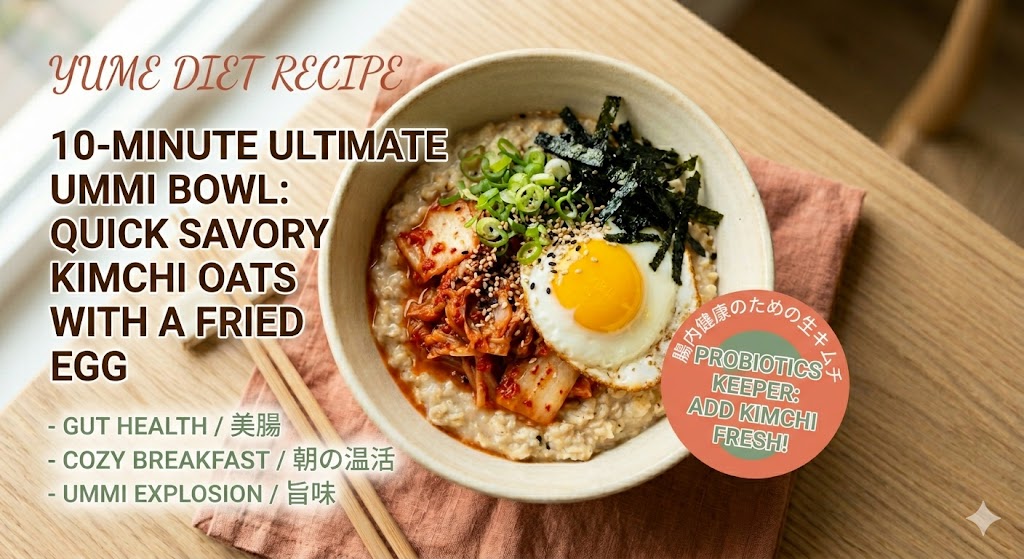
Honestly, I was skeptical the first time I tried savory oatmeal. Sweet oatmeal with berries had always been my thing, and the idea of turning it into something more like a savory porridge felt a little weird. But one cold Tuesday morning, I had kimchi in the fridge, rolled oats on the shelf, and not much else — so I went for it.
That bowl completely changed how I think about breakfast.
The version I’m sharing today isn’t your typical “just dump some soy sauce in and call it Asian.” I’ve been playing with this recipe for a while, and the thing that makes it actually good — not just edible — is dashi. A simple Japanese broth base that adds this quiet, deep umami that you can’t quite put your finger on but immediately notice when it’s missing.
It’s ready in ten minutes. It genuinely keeps you full until lunch. And yes, it’s become a regular in my weekly rotation.
Dashi broth as the base transforms the whole bowl — not just soy sauce and sesame oil thrown in at the end.
Active cooking time is barely five minutes. You can pull this together on a weekday morning without any drama.
The beta-glucan in oats paired with kimchi’s live cultures — but only if you handle the heat the right way (more on that below).
Wait — doesn’t cooking kimchi kill all the good bacteria?
This is probably the question I get asked most when I share this recipe. And the short answer is: yes, if you boil it, you lose most of the probiotic benefits. High heat kills the lactobacillus cultures that make kimchi so good for your digestive system.

The difference is simple: don’t boil it.
But here’s the thing — you don’t have to cook the kimchi at all. The way I make this bowl, the oats are cooked separately in the broth, and the kimchi goes on top at the very end, either stirred in off the heat or added as a fresh topping. That way you get the flavor and the probiotics.
What you’ll need (serves 1)
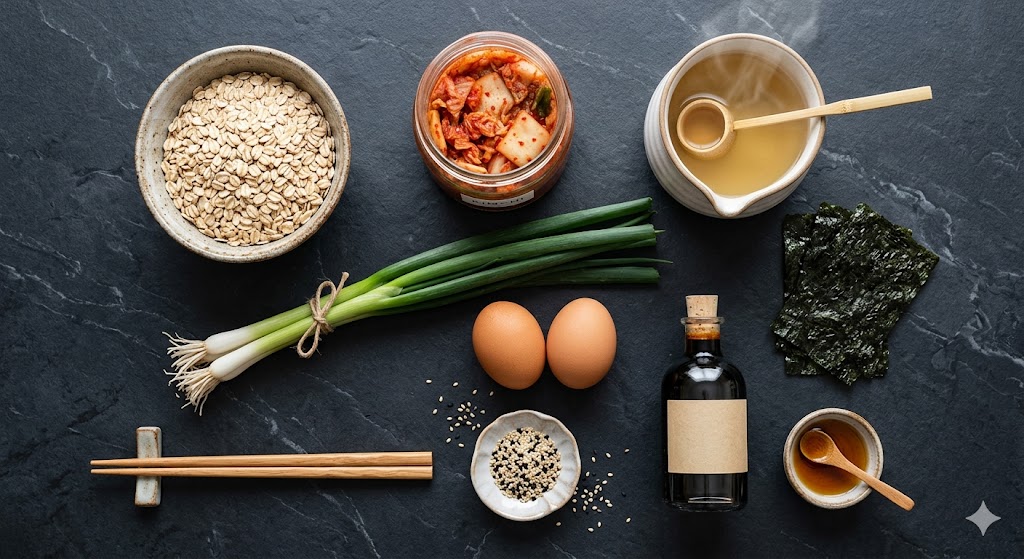
Everything you need, all in one place.
The list is short, and most of it you probably already have if you cook Asian food at home at all.
| Ingredient | Amount | Notes |
|---|---|---|
| Rolled oats | 40–50g | Instant oats work too, just cook faster |
| Dashi broth | 200–250ml | Dashi powder or chicken broth both work fine |
| Soy sauce | 1 tsp | Light or dark, either works |
| Sesame oil | ½ tsp | Just a finishing drizzle — don’t skip this |
| Kimchi | 50–80g | Store-bought is totally fine |
| Egg | 1 | Fried, runny yolk is the goal |
| Green onion | to taste | Sliced thin |
| Korean seaweed (gim) | 2–3 sheets | Crumbled on top |
| Sesame seeds | a pinch | Optional, but I always add them |
A note on the dashi: if you’ve never cooked with it before, dashi powder (like Hon Dashi) is the easiest starting point. You’ll find it at most Asian grocery stores, and honestly it’s one of those pantry staples that quietly makes everything taste better. If you can’t find it, chicken broth makes a solid substitute — the umami is slightly different but it still works.
How to make it
Three steps, ten minutes. Here’s exactly how I do it.
Simmer the oats in dashi
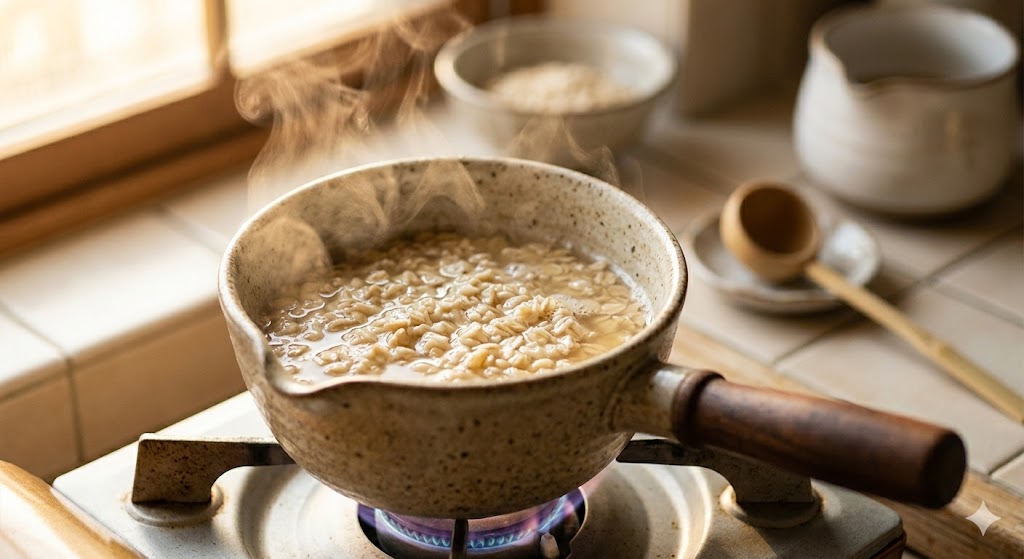
Bring the dashi broth to a gentle boil in a small saucepan, then add the rolled oats. Turn the heat down to low and cook for about 4–5 minutes, stirring occasionally, until the oats are soft and the whole thing has a thick, porridge-like consistency. Add a little more broth if you want it soupier.
Season and rest
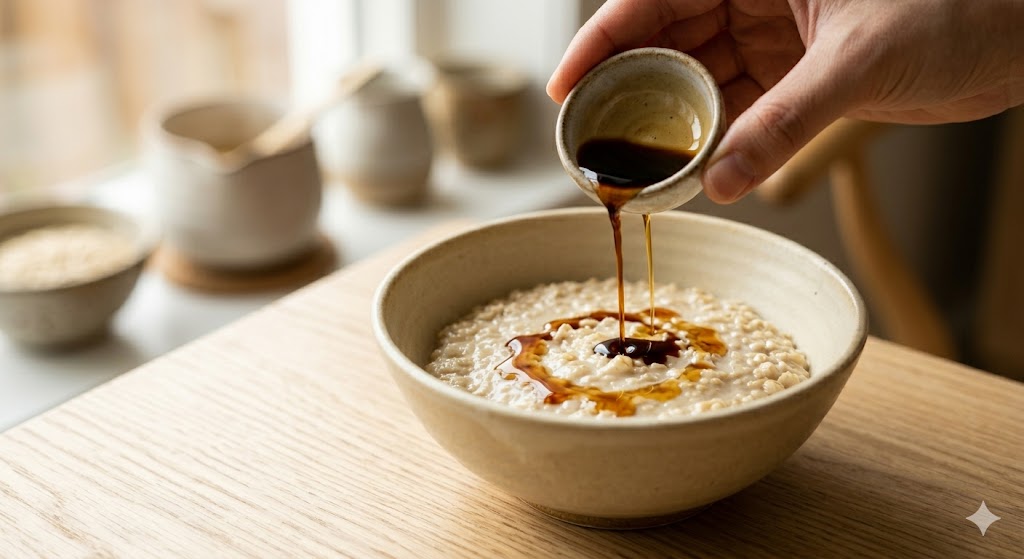
Take the pan off the heat. Add the soy sauce and a small drizzle of sesame oil, and stir everything together gently. Let it sit for a minute — this is when I fry my egg, which gives the oats just enough time to cool down slightly before the kimchi goes in.
Build the bowl
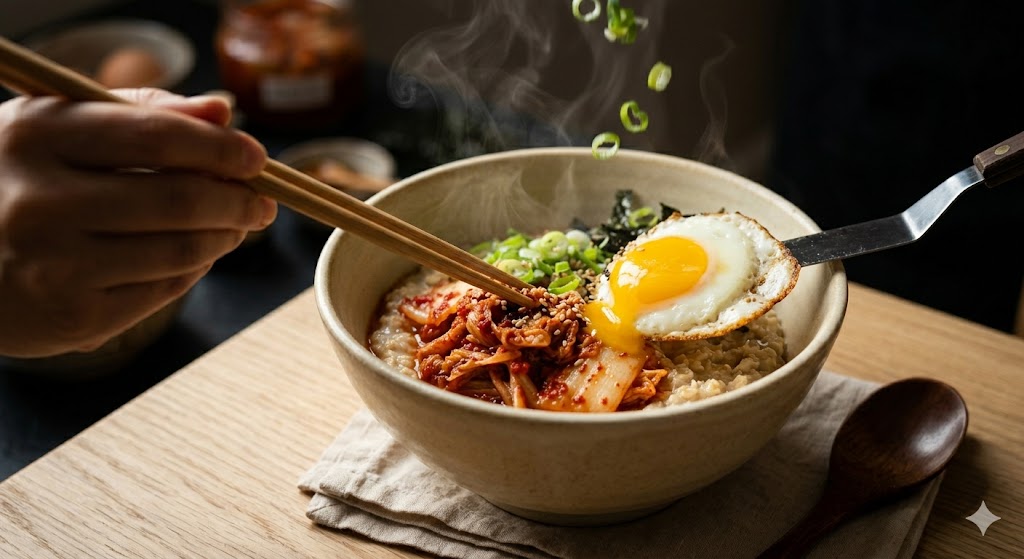
Pour the oats into a bowl, then layer on your toppings: kimchi first, then the fried egg on top (try to keep that yolk intact — it’s the best part), sliced green onion, crumbled seaweed, and a scatter of sesame seeds. That’s it.
Three ways to mix it up
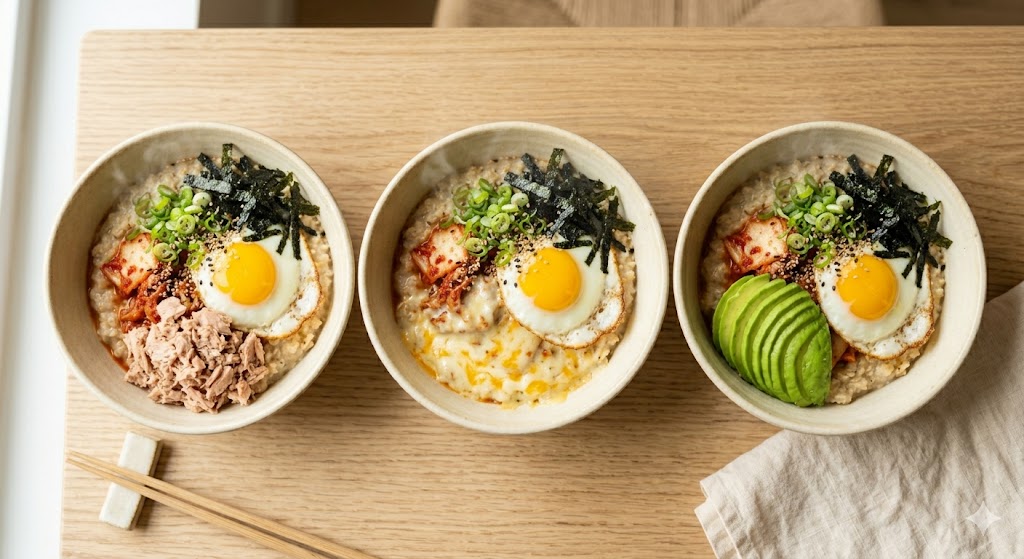
Left to right: tuna, cheese, avocado. All delicious, all different.
The base recipe is great on its own, but I rotate through these three versions depending on my mood and what’s in the fridge.
The tuna version is my go-to after a morning workout — it’s surprisingly satisfying and takes maybe thirty extra seconds to prepare. The cheese version is for the days when I want breakfast to feel a little indulgent.
Questions I get asked a lot
Yes, though the texture will be a bit softer and mushier. Rolled oats hold their shape better and give you something to chew, which I think makes the whole bowl more satisfying. But if instant is what you have, go for it — just watch the cook time, it’ll only need a minute or two.
Not really — any store-bought napa cabbage kimchi works here. If you have a choice, the older and more fermented your kimchi is, the deeper the flavor tends to be. That slightly sour, well-aged kimchi is honestly my favorite in this bowl.
Chicken broth is the easiest swap. It gives a slightly different kind of savory but still works well. If you want to stay closer to the original, look for Hon Dashi powder at an Asian grocery store — it’s cheap, keeps forever, and is genuinely useful to have around.
You can make the oat base ahead of time and reheat it in the morning with a splash of water or broth to loosen things up. Just add the kimchi and egg fresh — they both suffer if made in advance.
A few things to remember
- Dashi or a good broth as the base makes a real difference — don’t skip it
- Add the kimchi after the heat is off to keep the probiotics alive
- A runny-yolk fried egg on top ties the whole bowl together
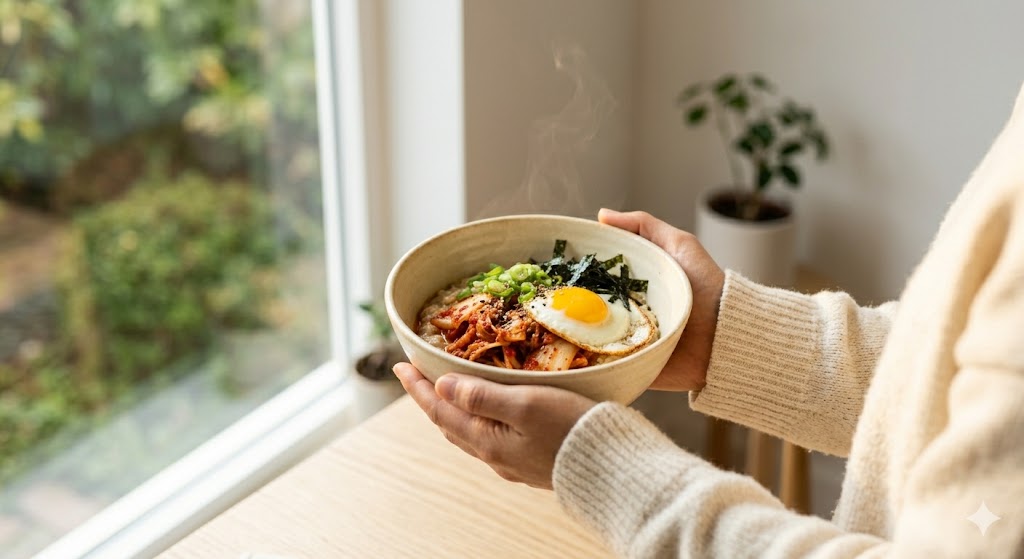
This has become one of those recipes I come back to over and over — not because it’s trendy, but because it’s genuinely good and takes almost no effort. If you’ve ever found oatmeal boring, this might be the version that changes your mind.
Let me know how it goes if you try it.